Foundations of Ayurveda
The Foundations of Ayurveda course offered by the Academy of Medical Sciences, Vietnam (AMS Vietnam) provides a structured and evidence-aware introduction to Ayurveda, one of the world’s oldest systems of traditional medicine.
The Foundations of Ayurveda course offered by the Academy of Medical Sciences, Vietnam (AMS Vietnam) provides a structured and evidence-aware introduction to Ayurveda, one of the world’s oldest systems of traditional medicine. This course is designed for healthcare professionals, researchers, educators, and health practitioners seeking a rigorous understanding of Ayurvedic principles within an academic, ethical, and interdisciplinary framework.
Ayurveda, originating in the Indian subcontinent over several millennia ago, is a comprehensive medical system that emphasizes balance, prevention, individualized care, and the integration of body, mind, and environment. While deeply rooted in classical texts, Ayurveda continues to be studied, applied, and evaluated in contemporary contexts, particularly in integrative medicine, preventive health, nutrition, and lifestyle science.
This course does not promote unverified claims or replace modern medical practice. Instead, it equips learners with foundational knowledge, critical perspectives, and contextual understanding necessary for informed study, research, or professional engagement with Ayurveda.
Course Objectives
The Foundations of Ayurveda course aims to:
- Introduce the historical development and philosophical foundations of Ayurveda
- Explain core theoretical concepts using clear, systematic frameworks
- Develop literacy in Ayurvedic terminology and classical logic
- Support evidence-informed and ethical engagement with traditional medicine
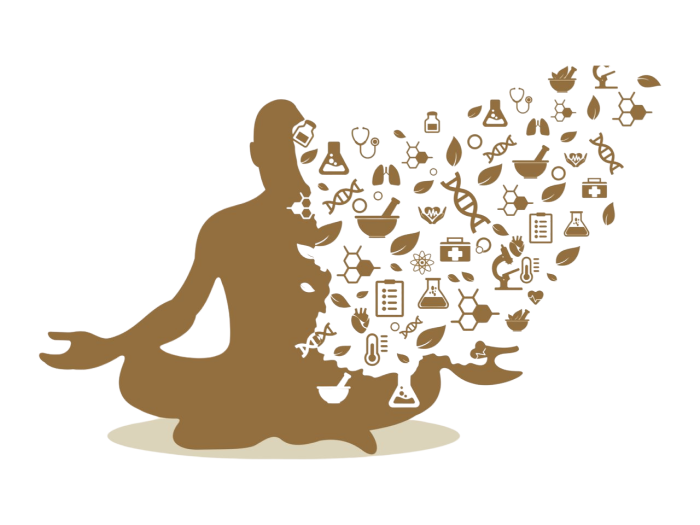
- Enable interdisciplinary dialogue between Ayurveda and modern health sciences
Upon completion, participants will possess a coherent conceptual map of Ayurveda and the ability to critically interpret its principles in educational, research, or integrative health settings.
Academic Positioning and Scope
AMS Vietnam delivers this course as part of its broader commitment to scientific education, traditional medicine studies, and integrative health research. The course is academically oriented and aligned with international standards for training in traditional and complementary medicine.
The curriculum emphasizes:
- Conceptual clarity rather than therapeutic instruction
- Scientific literacy and methodological awareness
- Respect for cultural and historical context
- Clear boundaries between education, research, and clinical practice
This approach ensures that Ayurveda is studied with intellectual rigor and professional responsibility.
Core Curriculum Structure
1. Origins and Historical Evolution of Ayurveda
The course begins with an overview of the historical and cultural origins of Ayurveda. Learners explore its development through classical texts such as the Charaka Samhita and Sushruta Samhita, as well as its evolution across different historical periods.
Key topics include:
- Philosophical foundations rooted in ancient Indian thought
- The role of Ayurveda in traditional healthcare systems
- Transmission of knowledge and textual traditions
- Contemporary global presence of Ayurveda
This section establishes the intellectual and cultural framework necessary for deeper study.
2. Fundamental Concepts of Ayurvedic Theory
Participants are introduced to the core theoretical constructs that define Ayurvedic understanding of health and disease.
These include:
- Panchamahabhuta (the five fundamental elements)
- Dosha theory (Vata, Pitta, Kapha)
- Prakriti (individual constitution)
- Agni, Ama, and metabolic balance
- Dhatu and Mala as structural and functional components
Concepts are presented systematically, with attention to internal coherence and logical structure, enabling learners to understand Ayurveda as a complete medical philosophy rather than a collection of practices.
3. Ayurvedic Perspectives on Health and Disease
This module examines how Ayurveda defines health, imbalance, and disease processes. Learners study Ayurvedic diagnostic logic at a conceptual level, including observation, inquiry, and pattern recognition.
Topics include:
- Holistic definitions of health and well-being
- Preventive orientation and maintenance of balance
- Lifestyle, seasonal, and environmental influences
- Individualized approaches to health assessment
The focus remains educational, emphasizing conceptual models rather than clinical diagnosis.
4. Diet, Lifestyle, and Preventive Principles
Ayurveda places strong emphasis on daily routines, nutrition, and behavioral alignment with natural rhythms. This section introduces the theoretical basis of these recommendations.
Covered themes include:
- Dietary classification and qualitative properties of food
- Daily and seasonal routines (Dinacharya and Ritucharya)
- Sleep, activity, and mental balance
- Preventive health logic in traditional systems
These principles are discussed in relation to modern preventive health concepts, allowing learners to identify areas of convergence and divergence.
5. Introduction to Ayurvedic Materia Medica (Conceptual Level)
Participants receive a high-level overview of Ayurvedic substances and formulations, focusing on classification systems and theoretical attributes rather than preparation or usage.
Topics include:
- Concept of Dravya, Guna, Rasa, Virya, and Vipaka
- Herbal, mineral, and animal-origin substances (conceptual overview)
- Traditional categorization and functional logic
This module is strictly educational and does not include instructions for formulation or therapeutic application.
6. Ayurveda in Modern Research and Integrative Health
The course concludes with an exploration of Ayurveda in contemporary scientific and healthcare contexts.
Key areas include:
- Current trends in Ayurveda-related research
- Methodological challenges in studying traditional medicine
- Evidence evaluation and research design considerations
- Integration with modern healthcare systems
Learners are encouraged to critically assess claims, understand research limitations, and identify opportunities for responsible scientific inquiry.
Teaching and Learning Methods
The Foundations of Ayurveda course is delivered through a combination of:
- Structured lectures and learning modules
- Conceptual diagrams and comparative frameworks
- Reading materials and guided discussion
- Case-based theoretical illustrations
Delivery formats may include in-person sessions, online modules, or hybrid learning, depending on program structure.
Target Participants
This course is suitable for:
- Healthcare professionals seeking integrative knowledge
- Researchers and academics in health sciences
- Public health and policy professionals
- Educators and trainers in traditional medicine
- Advanced students in medicine, pharmacy, or health sciences
No prior training in Ayurveda is required.
Ethical Standards and Academic Integrity
AMS Vietnam upholds strict standards of academic integrity and ethical responsibility. This course does not substitute for licensed medical training and does not authorize clinical practice.
Participants are trained to:
- Distinguish education from medical application
- Respect regulatory and professional boundaries
- Apply critical thinking and evidence awareness
- Engage responsibly with traditional knowledge systems
Certification and Learning Outcomes
Upon successful completion, participants receive a certificate issued by the Academy of Medical Sciences, Vietnam, confirming completion of foundational training in Ayurvedic theory.
Graduates will be able to:
- Understand and explain core Ayurvedic concepts
- Engage in interdisciplinary dialogue on traditional medicine
- Critically evaluate Ayurveda-related information and research
- Apply foundational knowledge in academic or policy contexts
Commitment to Academic Excellence
Through the Foundations of Ayurveda course, the Academy of Medical Sciences, Vietnam reaffirms its commitment to high-quality education, scientific rigor, and respectful engagement with traditional medical knowledge. This course provides a solid intellectual foundation for further study, research, or integrative exploration of Ayurveda within modern health sciences.