Acupuncture Therapy
The Acupuncture Therapy Course of the Academy of Medical Sciences, Vietnam (AMS Vietnam) is a structured professional training program designed to provide comprehensive, evidence-informed education in acupuncture as a therapeutic modality.
The Acupuncture Therapy Course of the Academy of Medical Sciences, Vietnam (AMS Vietnam) is a structured professional training program designed to provide comprehensive, evidence-informed education in acupuncture as a therapeutic modality. The course integrates traditional medical knowledge with modern biomedical science, clinical reasoning, and ethical practice, ensuring that participants develop both theoretical understanding and applied clinical competence.
Acupuncture has been widely used for centuries in the management of pain, functional disorders, and supportive care across a range of medical conditions. In contemporary healthcare systems, acupuncture is increasingly evaluated and applied through scientific frameworks that emphasize safety, efficacy, and standardized practice. This course reflects that evolution, positioning acupuncture within an evidence-based, patient-centered, and professionally regulated context.
Course Objectives
The Acupuncture Therapy Course aims to equip participants with the knowledge and skills required to practice acupuncture responsibly and effectively within their professional scope. Upon completion, participants will be able to:
- Understand the theoretical foundations of acupuncture from both traditional and biomedical perspectives
- Apply core acupuncture techniques in a safe, standardized, and clinically appropriate manner
- Integrate acupuncture therapy into comprehensive treatment and rehabilitation plans
- Evaluate indications, contraindications, and risk factors in diverse patient populations
- Apply principles of clinical reasoning, documentation, and outcome assessment
- Adhere to ethical standards, professional regulations, and patient safety requirements
The course emphasizes competence, clinical judgment, and accountability rather than procedural repetition alone.
Target Participants
This course is designed for healthcare and allied health professionals who seek formal training in acupuncture therapy, including:
- Medical doctors and clinicians
- Traditional medicine practitioners
- Physiotherapists and rehabilitation professionals
- Nurses and allied health professionals
- Researchers and educators in integrative medicine
Eligibility requirements are defined in accordance with applicable regulations and professional standards. AMS Vietnam ensures that participant selection aligns with both educational objectives and patient safety considerations.
Curriculum Structure
The Acupuncture Therapy Course is organized into progressive modules that move from foundational theory to applied clinical practice.
1. Foundations of Acupuncture Therapy
Participants are introduced to the historical development, theoretical principles, and conceptual frameworks of acupuncture. Topics include meridian systems, acupoint classification, and traditional diagnostic concepts, presented alongside modern anatomical and physiological interpretations.
This module establishes a common intellectual foundation and bridges traditional concepts with contemporary medical understanding.
2. Biomedical Basis and Mechanisms of Action
To support evidence-informed practice, the course examines current scientific perspectives on acupuncture mechanisms, including neurophysiological, biochemical, and regulatory pathways. Participants explore how acupuncture interacts with pain modulation, autonomic regulation, and functional recovery.
This integration strengthens clinical reasoning and interdisciplinary communication.
3. Acupuncture Techniques and Procedures
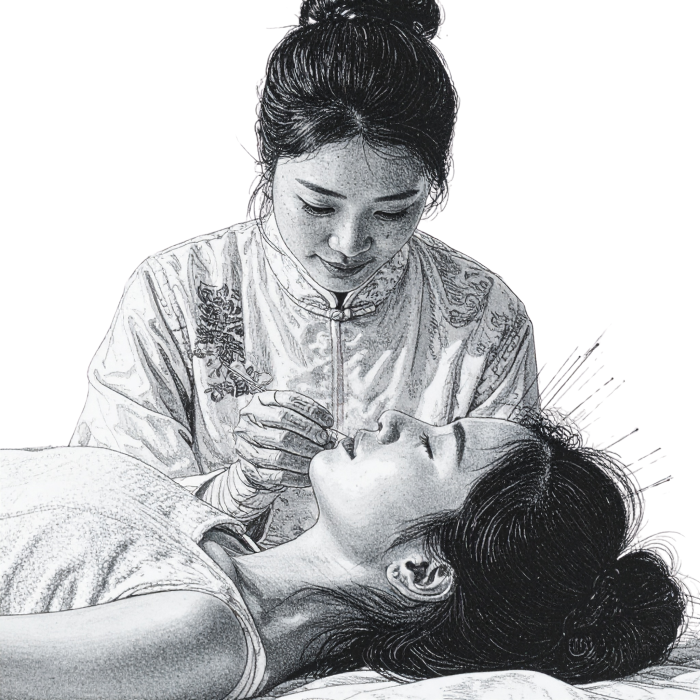
This module focuses on standardized acupuncture techniques, including needle selection, insertion methods, depth and angle considerations, stimulation techniques, and session planning. Emphasis is placed on aseptic technique, safety protocols, and patient comfort.
Hands-on training is conducted under faculty supervision to ensure technical accuracy and adherence to best practices.
4. Clinical Applications
Participants study the application of acupuncture therapy across common clinical contexts, such as musculoskeletal pain, neurological conditions, functional disorders, and supportive care. Case-based learning encourages analytical thinking and appropriate integration with conventional medical treatments.
Clinical decision-making, treatment planning, and outcome evaluation are central to this module.
5. Safety, Ethics, and Risk Management
Patient safety is a core priority of AMS Vietnam. This module addresses contraindications, adverse event prevention, infection control, and emergency response protocols. Ethical considerations, informed consent, professional boundaries, and regulatory compliance are also emphasized.
Participants are trained to recognize limitations of practice and to refer appropriately when necessary.
6. Documentation and Outcome Assessment
Accurate documentation and evaluation are essential for clinical quality and accountability. This module covers clinical record-keeping, treatment monitoring, outcome measurement, and basic principles of clinical audit and quality improvement.
Teaching and Learning Methods
The Acupuncture Therapy Course employs a blended instructional approach to maximize learning effectiveness:
- Structured lectures and seminars
- Demonstrations and supervised practical sessions
- Case discussions and problem-based learning
- Skills assessment and reflective practice
- Guided self-study and reference materials
Teaching methods are designed to support adult learners and working professionals, balancing theoretical depth with practical relevance.
Faculty and Academic Oversight
The course is delivered by experienced faculty members with expertise in acupuncture therapy, clinical medicine, and medical education. Faculty selection is based on academic credentials, clinical experience, and teaching competence.
Academic oversight is provided by AMS Vietnam to ensure curriculum integrity, alignment with institutional standards, and continuous quality improvement. Course content is periodically reviewed to reflect advances in science, practice guidelines, and regulatory requirements.
Assessment and Certification
Participant assessment is conducted through a combination of theoretical evaluation, practical skills assessment, and participation in supervised clinical activities. Assessment criteria focus on competence, safety, and professional conduct.
Participants who meet all academic and assessment requirements are awarded a Course Completion Certificate issued by the Academy of Medical Sciences, Vietnam, in accordance with applicable regulations and institutional policies.
Ethical and Professional Standards
Ethical practice is embedded throughout the course. Participants are expected to adhere to professional conduct standards, respect patient rights, and apply acupuncture therapy within appropriate legal and professional boundaries.
AMS Vietnam emphasizes responsible practice, evidence-informed decision-making, and continuous professional development as essential components of long-term clinical competence.
Integration into Professional Practice
Graduates of the Acupuncture Therapy Course are prepared to integrate acupuncture into clinical practice as part of a comprehensive, multidisciplinary approach to patient care. The course supports participants in applying acupuncture therapy in a manner that complements conventional medical treatments and rehabilitation strategies.
By emphasizing clinical reasoning, safety, and outcomes, the program enhances both individual professional capability and overall healthcare quality.
Commitment to Educational Excellence
Through the Acupuncture Therapy Course, the Academy of Medical Sciences, Vietnam reaffirms its commitment to high-quality, ethically grounded, and scientifically informed training. The course reflects the Academy’s broader mission to advance integrative medical knowledge, strengthen healthcare capacity, and contribute to improved health outcomes.